Introduction
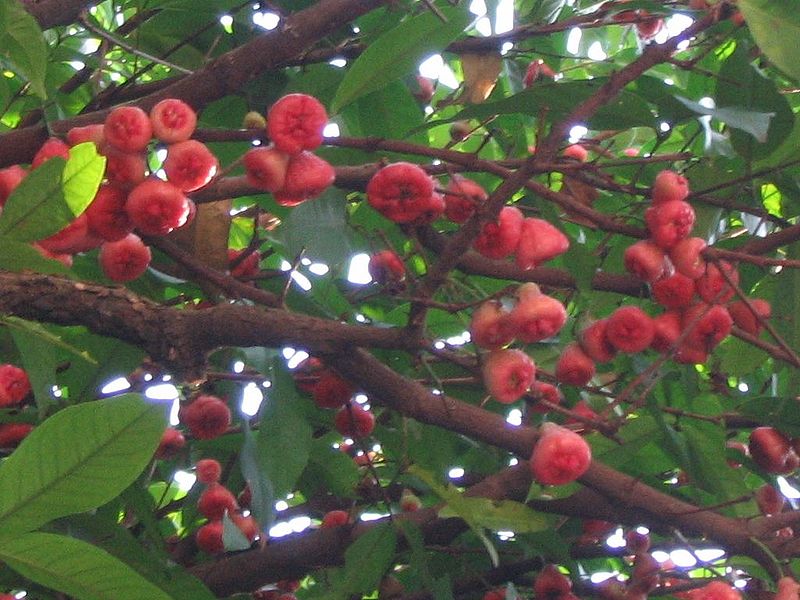
Rose apple scientifically known as Syzygium jambos, is a tropical tree native to Southeast Asia but is now cultivated in various tropical regions around the world. Here’s an overview of the Rose apple plant:
1. Tree Characteristics: –
Rose apple is a medium-sized evergreen tree, typically reaching heights of 10-12 meters (33-39 feet). – The tree has a dense canopy of glossy, elliptical leaves that are aromatic when crushed.
2. Fruit: –
The fruit of the Rose apple is round to oval, with colors ranging from green to pink or red when ripe, depending on the variety. – The flesh is crisp, sweet, and aromatic, resembling the flavor of rose water, hence the name “Rose apple.”
3. Flowers:-
Rose apple produces small, fragrant, white flowers that are often used for ornamental purposes.
4. Culinary Uses: –
Rose apple fruit is typically consumed fresh. It can be eaten as a whole, and the seeds are usually discarded. – It’s used in salads, desserts, and as a refreshing snack.
5. Health Benefits: –
Rose apple is a good source of vitamin C, fiber, and various antioxidants, contributing to overall health and immunity.
6. Medicinal Uses: –
In traditional medicine, various parts of the tree, including the leaves, are used to treat ailments such as diarrhea, dysentery, and inflammation.
7. Aromatic Uses: –
The leaves and flowers of the Rose apple tree are used for their pleasant fragrance in perfumes and aromatherapy.
8. Cultivation:-
Rose apple trees thrive in tropical and subtropical climates and are relatively easy to cultivate. – The tree is adaptable and can grow in a variety of soil types.
9. Conservation:-
Efforts are made to conserve and protect the genetic diversity of Rose apple varieties, as it is an important fruit tree in many regions.
10. Pest and Disease Resistance: –
Rose apple is known for its resistance to many common pests and diseases, making it an attractive option for organic farming.
In conclusion,Rose apple is a delightful and versatile tree, celebrated for its sweet and aromatic fruit and the various uses of its leaves and flowers. It’s not only a source of delicious and healthy food but also contributes to traditional medicine and aromatic industries.
 K.S.S College Subrahmanya